Surfing Indonesia: What a Week at DHM Surf Camp Looks Like
Thousands of surfers visit Indonesia every year for warm water and reliable waves. Many spend...


Stay Well Informed
Stay up to date with fresh insights, trends, and helpful advice from the DHM team.


Hello Sir only for demo content.
More articles by DHM
Share with your community!


You’ve found a camp that looks perfect. Great photos, reasonable price, five-star reviews, and you pay.
Then you arrive and find out the surf lessons mean one 90-minute session per day. The instructor-to-student ratio is one to twelve. Your “beachfront” accommodation is a 25-minute scooter ride from the water.
This happens more than you’d think. Indonesia draws over 300,000 dedicated surf tourists each year, per the Indonesian Ministry of Tourism. The quality gap between camps is huge.
These are the 12 questions experienced surf travellers wish they’d asked before booking their first Indonesia surf camp. Ask them all before you hand over a deposit.
Beach breaks are easy for beginners. Reef breaks are faster and shallower, great for intermediates, and dangerous for first-timers.
Most camps list their local breaks on their website. If they don’t, ask directly. A camp that uses reef breaks for beginners isn’t lying, but it’s a mismatch you need to catch upfront.
Every camp claims to cater to all levels. Ask more.
A real beginner program uses foam boards and waist-high waves and starts with dry land drills. If the camp can’t describe this clearly, find other options.
Flat spells happen everywhere in Indonesia. A good camp has a plan, theory sessions, yoga, cross-training, or nearby breaks that they switch to.
A camp with no answer to this question is telling you something important about how they value your time.
Some camps offer one session per day and call it a full program. Others run two or three sessions daily with video review and land training in between.
Ask for the specific number of hours of water time per day. Ask whether board and leash hire are covered.
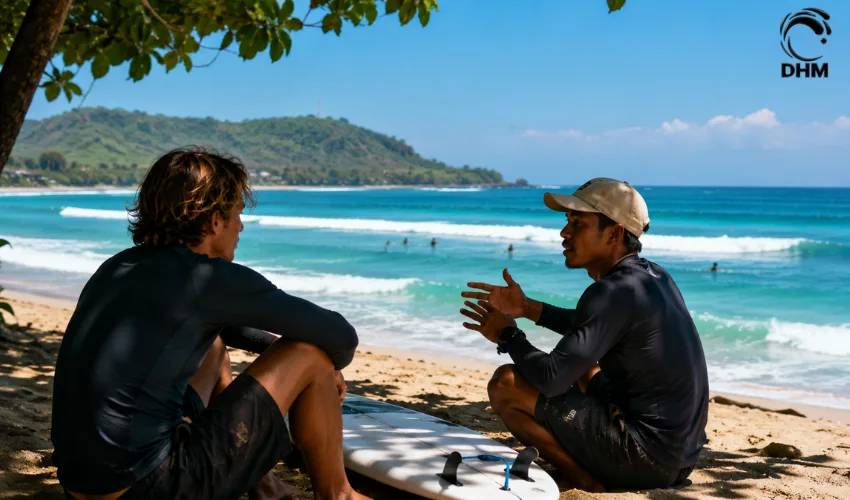
An instructor running eight students at once can’t watch everyone fall. The International Surfing Association (ISA) recommends a maximum of 6:1 for beginner surf coaching.
Ask for the exact number. A camp that gives you a range like “four to eight” is not giving you a real answer.
“Surf camp” implies you’re close to the water. Some camps are genuinely steps from the break. Others are 20 minutes inland and call themselves surf camps because they offer nearby lessons.
Ask the exact distance. Ask whether transfers are included. Ask what time morning sessions start. A 5:30 am departure from lodging that’s half an hour away changes your whole experience.
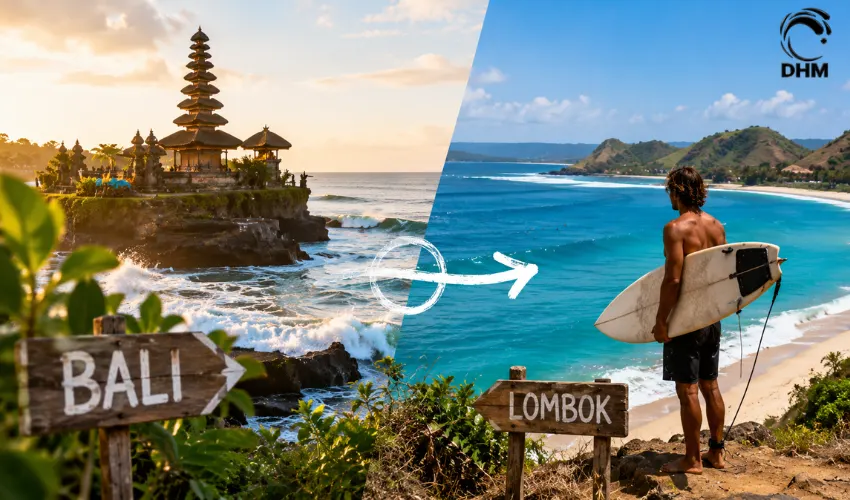
Bali gets more attention. But for first-timers who want fewer crowds and more consistent learner breaks, a surf camp in Lombok offers things that most Bali surf camp options can’t match.
Bali has more infrastructure and more camps. Lombok is quieter, with fewer people at well-known breaks like Desert Point and Gerupuk Bay.
Surf camp in Lombok at Gerupuk Bay means multiple bay setups within a short boat ride and different wave options depending on your level and the day’s conditions.
A lombok surf camp right on Gerupuk Bay puts you in the water in under five minutes. One in Kuta, Lombok might be 10–15 minutes by scooter.
Neither is wrong, but know the actual distance before you check in.
A camp that surfs one spot every day limits your progression. Good camps rotate between breaks based on conditions and group skill level.
Ask how many different breaks they use and how they decide where to go each morning.
Want to see what a well-run camp actually looks like? DHM runs small-group surf programs at Gerupuk Bay in Lombok, with a maximum 5:1 instructor ratio and two full water sessions daily. View the DHM Lombok surf programme →
ISA (International Surfing Association) certification is the global standard for surf instruction. Ask whether your instructors are ISA-certified or hold an equivalent national credential.
An uncertified instructor isn’t automatically bad. But certification means training in water safety, rescue techniques, and teaching progression, not just that they surf well.
Ask this directly. A serious camp will have a clear answer: a first aid kit on the beach, a trained lifeguard present, and a plan for getting someone to medical care fast.
The nearest hospital to some Lombok breaks is over an hour away. Know the plan before you need it.
Some camps include basic insurance. Most don’t. A surf-specific policy covers board damage, emergency evacuation, and medical treatment.
World Nomads and SafetyWing both offer surf-specific travel cover. Ask the camp whether their liability waiver requires or recommends it before you arrive.
A quality surf camp in Indonesia typically runs $80–$200 USD per day, all-in. Budget options exist around $50–60 per day, but usually mean fewer sessions and larger groups.
Yes. Particularly Lombok and south Bali, which have long, forgiving beach breaks suited to learning. Gerupuk Bay in Lombok has calm, quiet water that is perfect for beginners learning to surf.
May to September is peak season with the most crowds. March, April, October, and November offer solid surf with smaller crowds and also lower prices.
Lombok is usually the better pick for beginners. It’s quieter, the learner breaks at Gerupuk Bay are calmer, and the camp environment is more focused. Bali’s famous spots like Uluwatu and Padang Padang are intermediate-to-advanced breaks.
Most surf coaches recommend a minimum of five to seven days to see real progression. Three days gives you a taste; two weeks gives you a skill.
A well-run Indonesian surf camp tells you exactly what to expect, which breaks you’ll use, how many people will be in your group, and what happens if conditions change.
The instructor ratio matters more than the photos on the camp’s Instagram. Daily water time, not “surf lessons,” is what to negotiate on. And your exact distance from the break shapes your whole week, from sleep schedule to wave count.
Ask all 12 questions before you pay a deposit. If a camp can’t answer them clearly, that answer tells you something, too.
DHM runs small-group surf programs at Lombok’s Gerupuk Bay. Two sessions daily, five surfers per instructor, and a clear emergency plan on the water. Check availability and programme dates at DHM →
Surf, sun, and endless excitement await! Whether you’re a beginner or a pro, explore the world of surfing through tips, destinations, and breathtaking moments.
.png)